
Strattera for Adult ADHD: How It Works, Side Effects, and What to Expect
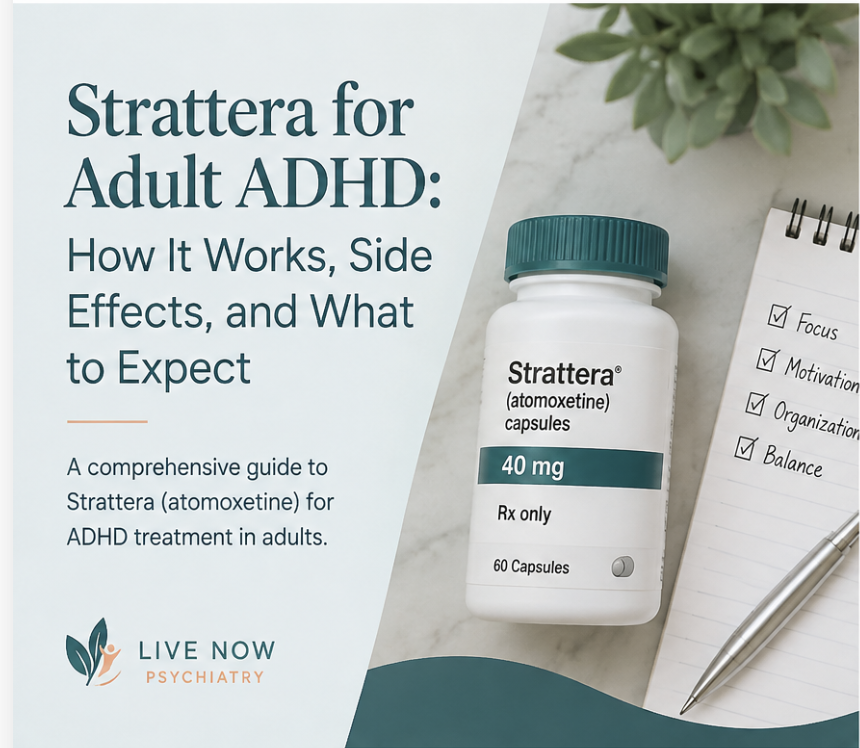
Strattera, the brand name for atomoxetine, is a nonstimulant medication used to treat attention-deficit/hyperactivity disorder (ADHD) in adults and children.
For adults exploring ADHD treatment, Strattera can be an important medication to understand because it works differently from stimulant medications such as amphetamine- or methylphenidate-based treatments.
Unlike many stimulant ADHD medications, Strattera does not typically produce an immediate noticeable effect after a single dose. Its benefits may develop gradually over time, and it is generally taken consistently as prescribed.
At Live Now Psychiatry, Florida adults can receive online ADHD evaluations and treatmentthrough secure telehealth appointments.
This guide explains how Strattera works, how long it may take to work, common and serious side effects, how Strattera differs from stimulant ADHD medications, and what adults should discuss with their provider before starting treatment.
Adults 18+ • Florida only • Secure telehealth • Self-pay psychiatric care
What Is Strattera?
Strattera is the brand name for atomoxetine, a prescription medication used to treat ADHD.
Atomoxetine belongs to a class of medications called selective norepinephrine reuptake inhibitors. It works primarily by increasing the availability of norepinephrine, a chemical messenger involved in attention and behavioral regulation.
Strattera is considered a nonstimulant ADHD medication.
This makes it different from medications such as Adderall, Vyvanse, Ritalin, and Concerta, which belong to stimulant medication classes.
Medication is only one possible part of ADHD treatment. A comprehensive approach may also involve behavioral strategies, organization techniques, psychotherapy when appropriate, sleep optimization, and treatment of other mental health or medical conditions that may affect attention.
If you are still comparing different medication approaches, read ADHD Medication Options for Adults.
How Does Strattera Work for Adult ADHD?
Strattera primarily affects norepinephrine signaling in the brain.
Norepinephrine plays a role in attention, alertness, behavioral regulation, and executive functioning.
The goal of ADHD treatment is not simply to make someone feel more productive. Treatment should ideally reduce clinically significant symptoms and improve functioning in everyday life.
For an adult with ADHD, improvement may involve:
Staying focused for longer periods
Becoming less easily distracted
Starting tasks more consistently
Finishing responsibilities
Improving organization
Managing impulsive behavior
Following conversations more easily
Keeping track of appointments or deadlines
Improving functioning at work, school, or home
A medication should be evaluated based on whether it meaningfully improves the problems ADHD is causing in daily life.
If you are unsure whether your symptoms may represent ADHD, read Adult ADHD Evaluation Online in Florida: What to Expect.
Is Strattera a Stimulant?
No.
Strattera is a nonstimulant medication for ADHD.
This is one of the most important differences between Strattera and many commonly prescribed ADHD medications.
Prescription stimulant medications include drugs from the amphetamine and methylphenidate families.
Examples include:
Adderall
Vyvanse
Dexedrine
Ritalin
Concerta
Prescription stimulants are federally classified as Schedule II controlled substances and carry FDA warnings regarding misuse, abuse, addiction, overdose, and diversion.
Strattera is not a stimulant and is not classified as a Schedule II controlled substance.
However, being a nonstimulant does not mean Strattera is automatically safer or more appropriate for every patient.
Strattera still has potential side effects, medication interactions, contraindications, and monitoring considerations.
Medication selection should always be individualized.
How Long Does Strattera Take to Work?
One of the most common questions adults ask is:
How long does Strattera take to start working?
Strattera generally does not work in the same immediate way that stimulant ADHD medications can.
Some people may begin noticing improvement relatively early, but the therapeutic effect often develops gradually.
According to MedlinePlus, some improvement may be noticed during the first week of treatment, but it may take up to approximately one month to experience the full benefit.
Every patient responds differently.
That means someone should not necessarily assume Strattera has failed after only a few days.
Follow-up with the prescribing clinician is important so treatment can be evaluated based on:
ADHD symptoms
Ability to function
Side effects
Sleep
Appetite
Mood
Blood pressure
Heart rate
Medication adherence
Overall quality of life
Do not increase, decrease, or stop prescription medication without discussing the change with your healthcare provider.
What Does Strattera Feel Like When It Starts Working
There is no single sensation that proves Strattera is working.
Because the medication may produce gradual changes, some adults notice improvement through their behavior and functioning rather than feeling an obvious medication effect.
For example, you might notice that:
You can finish an email without repeatedly becoming distracted
Starting work feels less overwhelming
You lose track of tasks less frequently
You remember appointments more consistently
You finish projects you previously abandoned
You are better able to follow conversations
You feel less impulsive
You are able to organize your day more effectively
Instead of focusing only on whether you can “feel” the medication, it may be more useful to ask: Am I functioning better in the areas where ADHD was causing problems?
Keeping track of specific goals before and after treatment can make follow-up appointments more useful.
What Are the Common Side Effects of Strattera?
Like all prescription medications, Strattera can cause side effects.
Some adults experience few or mild side effects, while others may experience symptoms significant enough to require a medication adjustment or a different treatment approach.
Commonly reported adult side effects can include:
Nausea
Constipation
Dry mouth
Decreased appetite
Dizziness
Fatigue or tiredness
Stomach discomfort
Headache
Increased sweating
Sexual side effects
Difficulty urinating
Sleep-related changes
The FDA prescribing information lists constipation, dry mouth, nausea, decreased appetite, dizziness, erectile dysfunction, and urinary hesitation among common adverse reactions reported in adult clinical trials.
If a side effect is severe, worsening, or concerning, call 911
Can Strattera Make You Tired?
Yes.
Fatigue, tiredness, or drowsiness can occur with atomoxetine.
This sometimes surprises adults because ADHD medication is often associated with stimulant medications, which may feel more activating.
Strattera affects people differently.
Some patients may experience:
Daytime tiredness
Drowsiness
Fatigue
Dizziness
Changes in sleep
If significant tiredness develops, discuss it with the prescribing clinician rather than independently changing the medication schedule.
Because atomoxetine can cause drowsiness or dizziness, patients should use caution with driving or operating machinery until they know how the medication affects them.
Can Strattera Affect Appetite or Weight?
Yes.
Decreased appetite can occur with Strattera, and some patients may experience weight loss.
Adults taking ADHD medication should pay attention to meaningful changes in:
Appetite
Food intake
Weight
Hydration
Energy levels
A small change may not necessarily be clinically significant, but persistent appetite suppression or unintended weight loss should be discussed with the prescribing provider.
This may be particularly important for individuals with medical or psychiatric histories that make adequate nutrition especially important.
Can Strattera Increase Blood Pressure or Heart Rate?
Yes.
Strattera can increase blood pressure and heart rate in some patients.
Before prescribing atomoxetine, a healthcare provider may review:
Blood pressure
Heart rate
Personal cardiovascular history
History of heart rhythm abnormalities
Structural heart disease
History of fainting
Family history of sudden cardiac death or serious rhythm problems
Other medications that may affect cardiovascular function
The FDA prescribing information notes that increases in blood pressure and heart rate may occur and recommends caution in patients with certain cardiovascular conditions.
Patients should call 911 for:
Chest pain
Significant shortness of breath
Fainting
New or concerning palpitations
Other severe cardiovascular symptoms
Severe side effects
Strattera vs. Stimulant ADHD Medications: What’s the Difference?
Strattera and stimulant medications can both be used in ADHD treatment, but they work differently.
Here is an easy comparison.
Strattera / Atomoxetine
Medication type: Nonstimulant ADHD medication
Controlled substance: No
Main mechanism: Primarily affects norepinephrine
How quickly it works: Benefit typically develops gradually
How it is generally used: Usually taken consistently as prescribed
Misuse potential: Does not carry the same stimulant-related misuse and addiction concerns
Possible side effects: May include nausea, decreased appetite, fatigue, dry mouth, dizziness, constipation, sexual side effects, urinary symptoms, and changes in blood pressure or heart rate
Monitoring: Follow-up is still important to assess effectiveness, side effects, mood, vital signs when appropriate, and overall functioning
Stimulant ADHD Medications
Medication type: Stimulant
Examples: Amphetamine- and methylphenidate-based medications
Controlled substance: Yes — prescription stimulants are Schedule II controlled substances in the United States
How quickly they work: Effects are generally noticed more rapidly than with atomoxetine
Main neurotransmitters involved: Dopamine and norepinephrine signaling
Possible side effects: May include decreased appetite, insomnia, increased blood pressure, increased heart rate, irritability, anxiety, headache, or stomach discomfort
Misuse potential: Prescription stimulants carry FDA warnings regarding misuse, abuse, addiction, diversion, and overdose
Monitoring: Follow-up may include symptom improvement, side effects, blood pressure, heart rate, sleep, appetite, medication adherence, and assessment for inappropriate use or diversion
Is Strattera Better Than a Stimulant?
Not necessarily.
There is no single ADHD medication that is best for every adult.
Some adults respond very well to stimulant medication. Others may benefit from a nonstimulant medication such as Strattera.
Medication selection may depend on:
Type and severity of ADHD symptoms
Medical history
Cardiovascular history
Psychiatric history
Current medications
Potential medication interactions
Previous medication response
Previous side effects
Substance-use history
Sleep
Appetite and weight
Patient preferences
Other individual clinical considerations
The appropriate treatment should be determined through an individualized psychiatric evaluation.
For a broader comparison, read ADHD Medication Options for Adults.
Who Might Consider a Nonstimulant ADHD Medication?
There is no single type of patient who should automatically receive Strattera.
However, an adult and their healthcare provider may discuss a nonstimulant option when:
A patient prefers to explore nonstimulant treatment
Another medication caused unwanted side effects
A previous medication was not sufficiently effective
The patient's medical history affects medication selection
The patient's psychiatric history affects medication selection
Substance-use considerations are relevant
A clinician believes a nonstimulant treatment may be appropriate
The patient and provider are considering multiple ADHD treatment options
A medication decision should be based on the person's complete clinical picture rather than simply requesting a particular medication.
Can Strattera Help ADHD and Anxiety?
ADHD and anxiety frequently have overlapping symptoms.
For example, either condition may contribute to:
Poor concentration
Difficulty completing tasks
Restlessness
Feeling overwhelmed
Sleep difficulties
Forgetfulness
Trouble organizing responsibilities
Difficulty functioning at work or school
However, these symptoms do not automatically mean someone has both conditions.
Anxiety can make concentration extremely difficult even when ADHD is not present
Likewise, untreated ADHD can sometimes contribute to anxiety related to missed deadlines, disorganization, poor performance, relationship conflict, or feeling chronically behind.
This is one reason an accurate evaluation matters.
If you are trying to understand which condition may be contributing to your symptoms, read ADHD vs. Anxiety: How to Tell the Difference.
What Should You Tell Your Provider Before Taking Strattera?
Your healthcare provider should know about your complete medical and psychiatric history before prescribing atomoxetine.
Tell your provider about:
All prescription medications
Over-the-counter medications
Vitamins
Supplements
Allergies
Heart disease
High blood pressure
Abnormal heart rhythms
History of fainting
Liver disease
Seizure history
Glaucoma
Pheochromocytoma
Depression
Bipolar disorder
History of suicidal thoughts or behavior
Current or past substance use
Previous ADHD medications
Previous medication reactions
Pregnancy
Plans for pregnancy
Breastfeeding
Medication interactions are also important.
Atomoxetine should not be taken with certain monoamine oxidase inhibitors (MAOIs) or within the required period after stopping them.
Other medications may also affect atomoxetine levels or require additional monitoring.
Always provide your prescriber with an accurate medication list.
Strattera and Pregnancy
Anyone who is pregnant, may be pregnant, is planning pregnancy, or is breastfeeding should discuss this with their healthcare provider.
Medication decisions during pregnancy require an individualized evaluation of potential benefits and risks.
Do not independently stop or change a psychiatric medication solely because you become pregnant or are considering pregnancy.
If pregnancy occurs while taking atomoxetine, contact your prescribing healthcare provider so your treatment can be reviewed.
Are There Serious Side Effects of Strattera?
Although many side effects are mild or manageable, serious adverse reactions are possible.
Contact a healthcare provider promptly or seek urgent medical care when appropriate for symptoms such as:
Chest pain
Significant shortness of breath
Fainting
Severe or rapidly worsening palpitations
Seizure
Hallucinations
Severe behavioral or mood changes
Severe allergic reaction
Swelling of the face, lips, tongue, or throat
Difficulty breathing or swallowing
Yellowing of the skin or eyes
Dark urine
Severe upper abdominal pain
Other severe or rapidly worsening symptoms
The FDA labeling also contains a boxed warning regarding increased risk of suicidal ideation in children and adolescents taking atomoxetine.
Regardless of age or medication, new suicidal thoughts, severe mood changes, psychotic symptoms, or other psychiatric emergencies require prompt professional evaluation. If you are experiencing an immediate medical or psychiatric emergency, call 911 or go to the nearest emergency department.
Why Follow-Up Matters When Taking Strattera
Starting medication is only one part of ADHD treatment.
Follow-up allows the patient and provider to determine whether the medication is actually improving ADHD symptoms and daily functioning.
During follow-up, a provider may review:
Attention and concentration
Distractibility
Task completion
Organization
Work performance
School performance
Home responsibilities
Relationship functioning
Sleep
Appetite
Weight
Blood pressure
Heart rate
Mood
Anxiety
Side effects
Medication adherence
New medications
New medical conditions
Treatment decisions should be based on both symptom improvement and tolerability.
If you take an ADHD medication and feel that its effect does not last as expected, read ADHD Medication Wearing Off Too Early? Why It Happens and What to Discuss With Your Provider.
Adult ADHD Treatment Is More Than Medication
ADHD treatment should not begin and end with choosing a medication.
A comprehensive adult ADHD evaluation may consider:
Current ADHD symptoms
Symptoms during childhood
Whether symptoms occur in more than one setting
Functional impairment
Educational history
Work history
Relationship functioning
Medical conditions
Psychiatric history
Anxiety symptoms
Depression symptoms
Sleep
Substance use
Current medications
Other possible causes of poor concentration
Several medical and psychiatric conditions can cause symptoms that resemble ADHD. That is why diagnosis should come before deciding which medication may be appropriate. Learn more about Adult ADHD Treatment in Florida. You may also find How to Know If You Have ADHD as an Adulthelpful.
Online ADHD Treatment for Adults in Florida
Live Now Psychiatryprovides online psychiatric care for adults throughout Florida through secure telehealth. Adults experiencing attention problems, distractibility, disorganization, impulsivity, or difficulty completing responsibilities can be evaluated to determine whether ADHD or another condition may be contributing.
When clinically appropriate, treatment may include:
Psychiatric evaluation
Medication management
Ongoing follow-up
Supportive therapy
Education about treatment options
An evaluation does not guarantee an ADHD diagnosis or prescription for any particular medication. Medication decisions are made only after an appropriate clinical evaluation and are based on each patient's individual medical and psychiatric needs.
Learn more about online ADHD treatment in Florida.
Frequently Asked Questions About Strattera for Adult ADHD
Is Strattera used for adult ADHD?
Yes. Atomoxetine is approved for the treatment of ADHD and may be used in adults as well as children and adolescents.
Is Strattera a stimulant?
No. Strattera is a nonstimulant medication that primarily affects norepinephrine.
How long does Strattera take to work?
Response varies. Some people may notice improvement earlier, while the full effect may take several weeks to develop.
Does Strattera work immediately?
Usually not.
Unlike stimulant medications, Strattera generally produces therapeutic benefits gradually rather than an obvious immediate effect after each dose.
Can Strattera make you tired?
Yes. Fatigue or drowsiness can occur in some patients.
Can Strattera decrease appetite?
Yes. Decreased appetite and weight loss can occur.
Can Strattera affect blood pressure or heart rate?
Yes. Atomoxetine can increase blood pressure and heart rate in some patients, which is why cardiovascular history and appropriate monitoring may be important.
Is Strattera better than Adderall or Vyvanse?
Not for everyone.
Strattera, Adderall, Vyvanse, and other ADHD medications have different mechanisms, benefits, side effects, and safety considerations.
The best treatment depends on the individual patient's clinical history and response.
Is Strattera a controlled substance?
No. Atomoxetine is not classified as a Schedule II controlled substance.
Can I stop Strattera if I do not think it is working?
Discuss the medication with your prescribing clinician before making changes.
Because Strattera may take several weeks to produce its full benefit, effectiveness should be evaluated over an appropriate period unless side effects or another clinical concern require earlier intervention.
Can adults receive ADHD treatment through telepsychiatry in Florida?
Yes. Florida adults may receive psychiatric evaluation and ADHD treatment through telehealth when clinically appropriate and permitted under applicable laws and professional standards.
A telehealth evaluation does not guarantee an ADHD diagnosis or prescription for any particular medication.
Resources
For additional information about atomoxetine, ADHD medication, and medication safety, consider these trusted sources:
U.S. Food and Drug Administration: Prescription Stimulant Medications
U.S. Food and Drug Administration: Strattera Prescribing Information
National Institute of Mental Health
Medical Disclaimer
The information provided in this article is for educational purposes only and is not intended to diagnose, treat, cure, or prevent any medical or mental health condition.
This article does not provide individualized medical advice and should not be used to determine whether a particular medication is appropriate for you.
Medication benefits, risks, interactions, contraindications, and monitoring requirements vary by individual.
Do not start, stop, increase, decrease, or otherwise change a prescription medication without discussing it with your prescribing healthcare professional.
Reading this article or visiting this website does not establish a provider-patient relationship with Live Now Psychiatry, LLC.
If you are experiencing a psychiatric or medical emergency, call 911 or go to the nearest emergency department.
Related Articles
About the Author
Rebecca Sommer, MSN, APRN, PMHNP-BC, FNP-C, is a dual-board-certified Psychiatric-Mental Health and Family Nurse Practitioner and founder of Live Now Psychiatry. She provides online psychiatric evaluations, ADHD treatment, medication management, and psychotherapy for adults throughout Florida. Her clinical background includes oncology and patient-centered healthcare.
Learn more about Rebecca Sommer's professional background and credentials.
Ready to Learn More About Adult ADHD Treatment?
If problems with attention, organization, distractibility, impulsivity, or completing responsibilities are interfering with your everyday life, an evaluation can help clarify what may be contributing and what treatment options may be appropriate.
Live Now Psychiatryprovides self-pay online psychiatric care for adults throughout Florida.
Services may include psychiatric evaluation, medication management when appropriate, and ongoing follow-up through secure telehealth.